
.png)
Neutering Is No Longer “One Size Fits All”: Why Timing Matters More Than Ever
By InsituGen
For years, veterinary professionals and pet owners have relied on general age guidelines when deciding the right time to neuter a dog. Traditionally, neutering was recommended as early as possible to reduce accidental breeding, unwanted behaviours, and certain reproductive health risks. However, new research suggests that the timing of neutering deserves a far more tailored approach, one that considers hormonal maturity.
The Role of Hormonal Maturity
Sex hormones have significant influence on numerous biological systems, including joint development, immune strength, metabolic regulation, and behaviour. Premature removal of these hormones before a dog has reached natural maturity may contribute to higher lifetime risks such as cruciate ligament ruptures, orthopaedic disease, unwanted weight gain and the sequelae of associated metabolic diseases, some cancers, and certain behavioural issues.
 This growing body of evidence has made neutering timing one of the most researched and debated veterinary topics in recent years, with several high-impact scientific articles and reviews reshaping public understanding.
Introducing NeuterReadyTM: A Scientific Step Forward
InsituGen's NeuterReadyTM diagnostic test represents a major evolution in neutering decision-making. Rather than relying on age-based assumptions, NeuterReadyTM measures functional androgen activity using a patented bioassay and can definitively guide whether a dog has reached hormonal maturity.
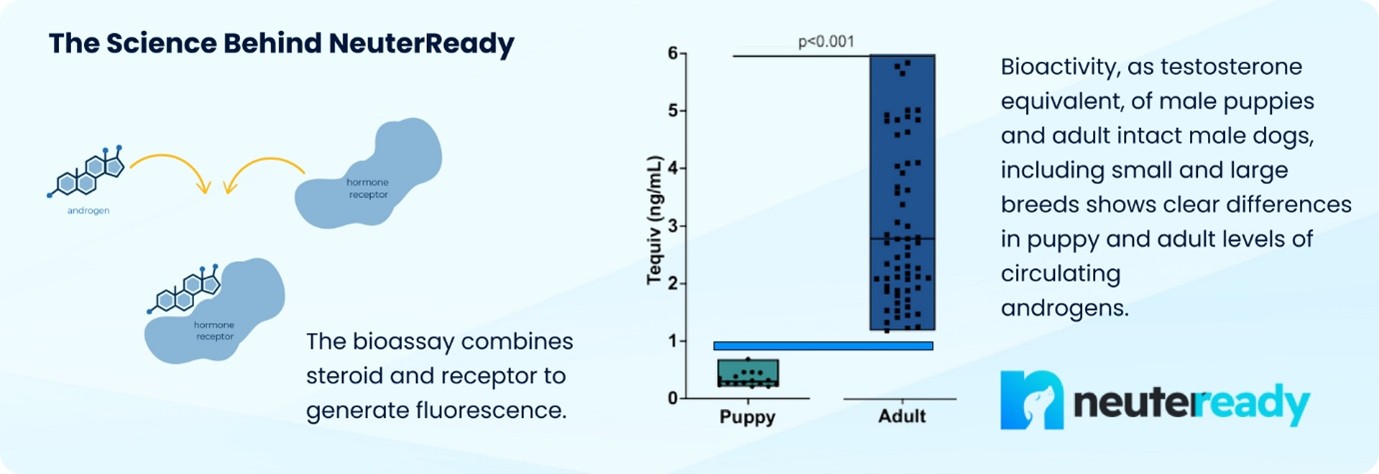 The test is simple: a single blood sample is collected by the vet, and results are returned within days from the testing laboratory. These results clearly distinguish hormonally immature dogs from those that are physiologically mature and ready for neutering.
Real-world cases highlight just how individualised this timing can be. For example, some dogs still show hormonal immaturity at > 12 months of age, while others as young as 6 months have already reached full maturity.
This variability underscores what vets have long suspected: breed size, growth rate, environmental and genetic factors influence readiness more than age does.
 Better Conversations, Better Outcomes
With results in hand, vets can have clearer, more confident discussions with owners about when to move forward. Instead of emphasising urgency or assumptions, they now have biological clarity to guide timing. This can also support informed decisions about alternatives, such as temporary chemical castration, while awaiting maturity.
Many owners report feeling empowered knowing the data behind their decision, and appreciative that the timing is based on what is healthiest for their individual pet.
A New Era in Preventative Veterinary Care
NeuterReadyTM is just the beginning. InsituGen plans to expand its diagnostic portfolio over several years, including solutions for spay timing, ovarian remnant detection, and routine annual steroid hormone health screening.
Taken collectively, these tools represent a shift toward proactive, evidence-based hormonal health management, improving outcomes far beyond the neutering conversation.
Final Thoughts
Neutering remains a valuable and important part of responsible pet ownership. What is changing, however, is how vets make this decision. With better science and more accurate diagnostics available, there's no longer a need to rely solely on age-based rules.
By understanding hormonal maturity, vets and pet owners can align neutering decisions with long-term health, ensuring fewer risks, happier animals, and more confident choices.
NeuterReadyTM is UK exclusive to NationWide Laboratories, ensuring a validated, quality-assured service, trusted access and seamless support. For more information, visit https://nwlabs.co.uk/neuterready